
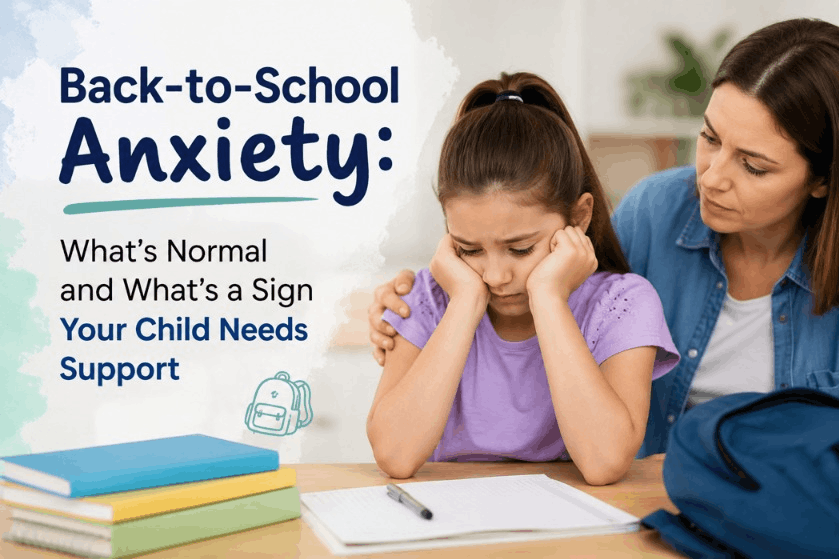
Returning to school is an exciting milestone, but for many children it can also bring feelings of nervousness, fear, and uncertainty. While some level of back-to-school anxiety is completely normal, persistent or intense anxiety may interfere with your child’s emotional well being, learning, and relationships.
As a parent, knowing the difference between typical back to school stress and more serious school anxiety can help you provide the right support at the right time.
In this guide, we’ll explore the signs, causes, and practical strategies to help your child feel confident and prepared for the school year.
- Understanding School Anxiety: What It Is and How It Shows Up
School anxiety is more than simply feeling nervous about the first day of class. It refers to ongoing feelings of worry, fear, or distress related to school, academic performance, friendships, teachers, or new routines.
Children experience anxiety differently depending on their age and personality. Some openly express their fears, while others may hide their emotions until they appear through physical complaints or behavioral changes.
Common emotional symptoms are:
Excessive worrying about school
Fear of making mistakes
Feeling overwhelmed
Irritability
Difficulty concentrating
Physical symptoms may include:
Stomachaches
Headaches
Nausea
Trouble sleeping
Fatigue
Recognizing these school anxiety symptoms early can prevent them from becoming more severe.
- What Are Some Signs of Back-to-School Anxiety?
Many children experience temporary jitters before school starts. However, persistent symptoms lasting several weeks may indicate something more significant.
Watch for signs such as:
Emotional Signs
Frequent crying
Mood swings
Increased clinginess
Constant reassurance seeking
Fear of attending school
Physical Signs
Complaints of stomach pain before school
Headaches without a medical cause
Poor appetite
Trouble sleeping
Behavioral Signs
Refusing to go to school
Avoiding homework
Withdrawal from friends
Increased tantrums
Declining academic performance
If these behaviors interfere with your child’s daily life, they may be experiencing more than ordinary back-to-school anxiety.
- Why School Anxiety Happens: Common Triggers and Causes
Every child’s experience is unique, but several common factors contribute to school anxiety.
- Starting a New School – New teachers, classmates, and unfamiliar environments can feel overwhelming.
- Academic Pressure – Children may worry about grades, tests, homework, or meeting expectations.
- Social Challenges – Friendships, bullying, peer pressure, or fitting in often create significant stress.
- Changes in Routine – After a relaxed summer schedule, adjusting to earlier mornings and structured days can increase back to school stress.
- Previous Negative Experiences – Past bullying, learning difficulties, or classroom struggles may make returning to school especially difficult.
- Family or Life Changes – Divorce, moving, illness, or loss can make school transitions even more challenging.
- Getting to the Root: Understanding What Your Child Is Experiencing
Instead of assuming your child simply doesn’t want to attend school, try to understand what they’re feeling beneath the surface.
Ask open ended questions like:
“What worries you most about school?”
“Is there something happening during the school day that makes you nervous?”
“When do you feel most anxious?”
Listen without immediately offering solutions or dismissing their concerns.
Children often need to feel heard before they’re ready to problem solve.
Keeping a journal of when anxiety occurs can also help identify patterns, such as anxiety before tests, social situations, or specific classes.
Understanding the root cause allows parents and caregivers to provide more effective support.
- Practical Ways to Support a Child Struggling with School Anxiety
Parents play a vital role in helping children build confidence and emotional resilience.
Here are several strategies that can help:
Listen Without Judgment
Encourage your child to share their feelings. Instead of immediately offering solutions, let them know their emotions are valid.
Example:
“I can see that school feels really difficult right now. Let’s figure this out together.”
Create Predictable Routines
Consistent morning and bedtime routines reduce uncertainty and help children feel more secure.
Include:
- Regular bedtime
- Healthy breakfast
- Preparing school items the night before
- Leaving home with enough time to avoid rushing
Teach Simple Relaxation Techniques
Practice calming exercises together:
- Deep breathing
- Progressive muscle relaxation
- Mindfulness activities
- Positive visualization
These skills help children manage anxious feelings before they become overwhelming.
Focus on Small Successes
Rather than expecting immediate improvement, celebrate small achievements.
For example:
- Going to school without tears
- Speaking in class
- Completing homework
- Making a new friend
Positive reinforcement builds confidence over time.
Work With Teachers
Teachers can share valuable insight and support.
Discuss:
- Classroom accommodations
- Safe spaces for breaks
- Seating arrangements
- Communication between home and school
A collaborative approach benefits the child.
Avoid Reinforcing Avoidance
Allowing frequent absences may provide short-term relief but can increase anxiety in the long run.
Instead, encourage gradual exposure while providing reassurance and support.
Encourage Healthy Habits
Physical health influences emotional well-being.
Promote:
- Regular exercise
- Nutritious meals
- Adequate sleep
- Limited screen time before bed
These habits can improve stress management.
Build Problem Solving Skills
Help your child think through challenging situations instead of solving every problem for them.
Ask questions like:
- “What do you think might help?”
- “What’s one small step you could take?”
- “Who could you ask for help at school?”
This encourages independence and resilience.
- Knowing When to Get Professional Support for Your Child’s Anxiety
Sometimes anxiety becomes more than parents can manage alone.
Consider seeking professional help if your child:
Frequently refuses to attend school
Experiences panic attacks
Has ongoing physical symptoms without a medical explanation
Withdraws from family or friends
Shows significant changes in eating or sleeping habits
Experiences anxiety that lasts for several weeks
Has anxiety that interferes with daily functioning
Mental health professionals can help identify the underlying causes and develop personalized strategies that support both the child and the family.
Early intervention often leads to better long-term emotional health and academic success.
Helping Your Child Feel Confident This School Year
Experiencing back-to-school anxiety doesn’t mean something is wrong with your child. Many children feel nervous about returning to school, and with understanding, encouragement, and the right support, they can successfully navigate these challenges.
If your child’s anxiety becomes persistent or begins affecting daily life, seeking professional guidance can make a meaningful difference.
At Wreh’s Wellness Center , we provide compassionate mental health services for children, adolescents, and families. Our team works closely with parents to understand each child’s unique needs and develop personalized care plans that promote confidence, emotional wellness, and healthy development.
If you’re concerned about your child’s anxiety or emotional well-being, we’re here to help. Contact us today to learn more about our behavioral health services and schedule an appointment.